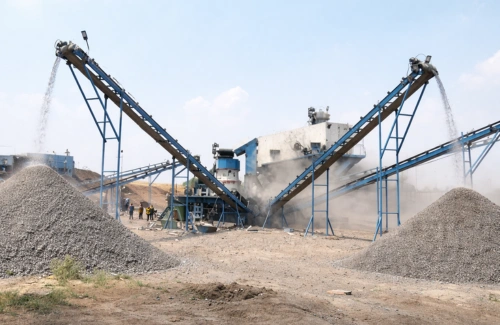
SFLO provides customized dust suppression systems targeting high-impact dust zones in crushing and material handling facilities:
Installed at jaw, cone, gyratory, and hammer crushers—our misting/fogging nozzles suppress dust right at the source.
Fog curtains and spray bars at chutes and loading points prevent airborne dust during material handover.
Fine mist systems over vibrating screens, trommels, and sizers help trap particles before dispersion.
Fog nozzles placed above feed zones and drop points control heavy dust release during material flow.
Compact, high-pressure misting systems designed for enclosed or tight dust-prone zones.

| Component | Description |
|---|---|
| Mist / Fog Nozzles | Brass, SS316, or polymer nozzles with <50 micron spray |
| High-Pressure Pumps | Up to 1000 PSI, ideal for long lines |
| Filters & Strainers | Prevent nozzle clogging from dust or sediment |
| Control Panels | Manual or automated, SCADA / PLC compatible |
| Fog Cannons (Optional) | For open crusher yards and stockpiles |
| Mounting Frames | Customized based on plant layout |

Aggregate & Crushing Plants
Effective dust control for operations handling blue metal, granite, stone, and slag.
Cement & Asphalt Plants
Reduces particulate emissions during material handling and loading processes.
Quarries & Mining Sites
Controls dust at conveyor transfer points, crushers, and screens.
Construction Material Processing Units
Keeps air clean and visibility clear during crushing, screening, and batching.
Industrial & Chemical Material Yards
Prevents harmful dust from escaping during dry material movement.
High-Pressure Mist/Fog Nozzles (10–50 microns)
Creates ultra-fine droplets that effectively capture dust particles mid-air.
Strategic Nozzle Placement
Positioned close to crushers, screens, conveyors, and hoppers where dust is generated.
Automated Activation
Systems run only when equipment is operational – reducing water waste.
Advanced Control Panels
Integrated with manual, remote, or PLC/SCADA control for ease of operation and system zoning.
Preventive Maintenance Contracts - Scheduled servicing to minimize downtime
Local Spare Parts Availability – Nozzles, filters, pumps, valves, and control panels
Emergency Breakdown Response – Fast on-site repair and diagnostic support across Qatar
System Audits & Troubleshooting – Regular inspection for pressure, coverage, and nozzle function
Retrofits & Upgrades – Enhance existing systems with automation or dry fog integration
On-site survey to identify high-dust points and optimal nozzle positions.
Engineered design for complete dust coverage with minimal water usage.
Centralized or decentralized systems with reliable, high-pressure pumps.
Interlocked with crushers, conveyors, or screeners for on-demand operation.
Hands-on training, user manuals, and routine maintenance guidelines.
Fast delivery, installation & ongoing support
Custom systems for jaw, cone, impact, and mobile crushers
Dry fog, misting, and hybrid suppression options
Designed to meet Qatar’s environmental & HSE standards
Serving top clients in mining, cement, quarrying & construction
Yes. Our systems can be fully automated with PLC integration, sensor-based activation, and interlocks with crushers and conveyors for energy and water efficiency.
Each nozzle typically consumes 2–5 liters per hour, making the system highly water-efficient compared to traditional sprinkler systems.
Basic maintenance includes cleaning/replacing nozzles, checking filters, verifying pump pressure, and routine inspections of pipes and valves.
Yes. Industrial Direct provides full turnkey service including site assessment, installation, training, and after-sales support across Doha, Mesaieed, Al Khor, and industrial zones.
Typical installation is completed within 1–3 days depending on system size and site complexity.
Yes. We maintain local stock of essential components like nozzles, pumps, and control units for faster turnaround and reduced downtime.
Absolutely. Our systems help clients comply with Qatar's environmental and air quality regulations by controlling PM10 and PM2.5 emissions at source.