Description
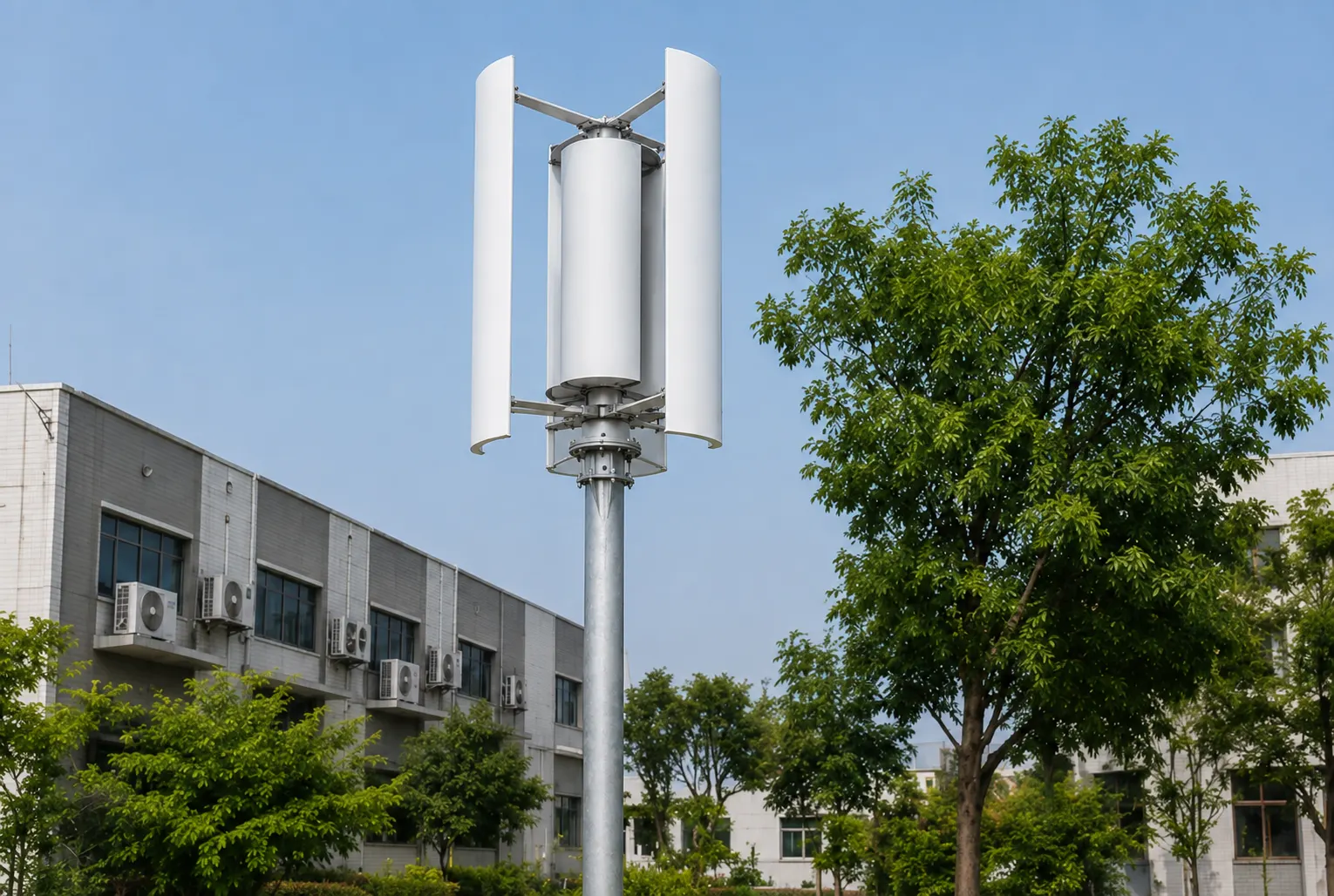
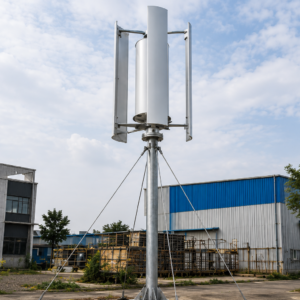
The 3 kW Vertical Axis Wind Turbine is designed to generate clean and reliable electricity for businesses, farms, telecom sites, industrial facilities, and remote locations.
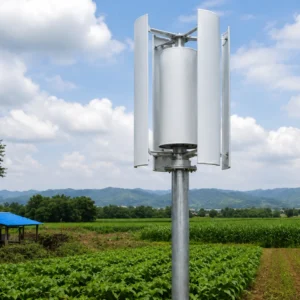
Its vertical-axis rotor captures wind from multiple directions without requiring a conventional yaw mechanism. High-strength aluminum-alloy blades and a brushless generator support efficient outdoor operation, while the MPPT hybrid smart controller helps regulate power output under changing wind conditions.
The turbine can be used in on-grid, off-grid, and hybrid renewable energy systems with compatible solar panels, batteries, and inverters.
FAQ
1. Is a 3 kW Vertical Axis Wind Turbine suitable for hybrid renewable energy systems?
Yes. It can be integrated with solar panels, battery storage, and compatible inverters to create a reliable hybrid power solution.
2. Where can a 3 kW Vertical Axis Wind Turbine be installed?
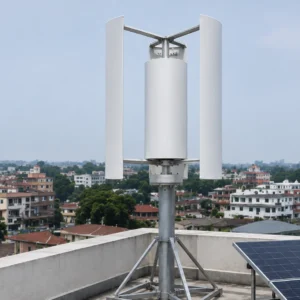
It can be installed on suitable rooftops, open commercial premises, industrial facilities, agricultural land, resorts, educational campuses, and other locations with adequate wind availability.
3. What factors should be considered before installation?
Wind availability, installation height, surrounding obstacles, structural suitability, and energy requirements should be evaluated to achieve the best performance.
4. Does the turbine require frequent maintenance?
No. Routine inspections of the blades, fasteners, electrical connections, bearings, and controller are generally sufficient to maintain reliable operation.
5. Can the system be used for off-grid applications?
Yes. When combined with batteries, a charge controller, and an inverter, the turbine can be used as part of an off-grid renewable energy system.
6. Is the 3 kW Vertical Axis Wind Turbine suitable for coastal areas?
Yes. When manufactured with corrosion-resistant materials and installed correctly, it can operate effectively in coastal and other outdoor environments.
7. How do I choose the right wind turbine capacity?
The ideal capacity depends on your daily electricity consumption, average wind speed, available installation space, and application. A professional site assessment helps determine the most suitable solution.