
Site cleanliness
Wheel Wash Systems for Construction Sites
Construction vehicles frequently carry mud, clay, sand, and loose debris onto public roads, creating safety risks and increasing road maintenance. Industrial Direct supplies Wheel Wash Systems for Construction Sites that automatically clean vehicle tyres, wheels, and undercarriages before they leave the site.
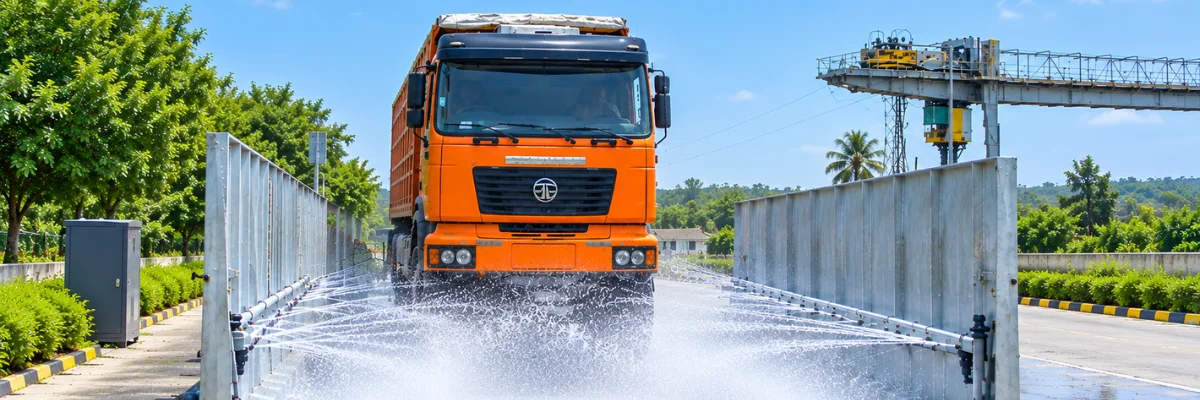
Designed for continuous operation, our wheel wash systems help contractors maintain cleaner site exits, reduce dust and mud tracking, improve environmental compliance, and create a safer working environment for both workers and the public.
Why Construction Sites Need a Wheel Wash System
Dump trucks, tippers, transit mixers, loaders and other construction vehicles frequently travel through muddy or unpaved working areas. Soil and debris can collect in tyre treads, around wheels and beneath the vehicle before being carried onto public roads.
This can create several operational problems:
Mud deposits on roads and site entrances.
- Dust when deposited soil dries.
- Slippery surfaces during wet weather.
- Additional road sweeping and water-tanker work.
- Complaints from neighbouring communities or project authorities.
- Delays caused by manual tyre cleaning at the site exit.
A construction site wheel wash system cleans vehicles before they leave the controlled area. Automatic operation also provides a more consistent process than relying entirely on manual hoses or labour-intensive cleaning.
Benefits of a Wheel Wash System for Construction Sites
Cleaner Public Roads
Removes mud, soil, and debris from vehicle tyres before they leave the construction site.
Reduced Dust Generation
Clean tyres prevent dried mud from becoming airborne dust on surrounding roads.
Improved Site Safety
Cleaner access roads reduce the risk of vehicle skidding caused by wet mud deposits.
Supports Environmental Compliance
Helps contractors meet local pollution control and road cleanliness requirements.
Lower Road Maintenance Costs
Reduces the frequency of manual road sweeping and water tanker operations.
Professional Project Image
A clean site reflects better project management and creates a positive impression on clients, consultants, and visitors.
Features of Wheel Wash System
Automatic Wash Cycle
The system activates automatically when a vehicle enters the wash platform.
High-Pressure Spray Technology
Strategically positioned spray nozzles remove mud from tyres, wheels, and undercarriage.
Heavy-Duty Drive-Through Platform
Designed to withstand continuous movement of loaded construction vehicles.
Water Recycling System
Collected water is filtered and reused, reducing fresh water consumption.
Fast Cleaning Process
Efficient wash cycles minimize vehicle waiting time and improve site productivity.
Rugged Outdoor Construction
Built with corrosion-resistant materials for reliable performance in harsh construction environments.
How the Wheel Wash System Works
Vehicle Entry
The driver slowly moves the vehicle onto the wheel wash platform.
Automatic Cleaning
High-pressure spray nozzles wash tyres, wheels, and the undercarriage from multiple angles.
Mud Collection
Mud, sand, and stones are directed into a sediment collection chamber.
Water Recycling
After sediment settles, filtered water is recirculated back into the system.
Why Choose Us?
Complete Wheel Wash Solutions
We supply, install, and commission wheel wash systems tailored to construction site requirements.
Custom-Built Systems
Solutions are designed based on vehicle size, traffic volume, and project conditions.
Quality Components
Our systems are built using durable pumps, spray nozzles, and heavy-duty structural materials.
Professional Installation
Experienced technicians ensure safe installation and reliable system performance.
Reliable Technical Support
We provide prompt assistance for maintenance, spare parts, and operational guidance.
Customer-Focused Service
From consultation to after-sales support, we work closely with customers to deliver dependable solutions.
Vehicle Exit
The cleaned vehicle exits the construction site, helping keep nearby roads clean.
What we need to prepare your quotation
- Number and type of vehicles per hour
- Type of contamination: mud, dust, clay or cement slurry
- Space available at the exit gate
- Water and power available on site
- Fixed installation or a relocatable unit
How we work
Tell us the duty
Share the application, site conditions, drawings or part numbers.
We ask the right questions
An engineer confirms the selection data before anything is priced.
Clear quotation
Price, scope, documentation and delivery set out in writing.
Delivery and support
Supply, installation where agreed, and after-sales follow-up.
Keep exploring
Related products and solutions
Wheel Wash Systems
Drive-through wheel wash with water recycling for site gates.
Mining Sites
Quarry Sites
Ready Mix Plants
Cement Plants
Waste Facilities
Dust Suppression Systems
Fog cannons, dry fog, wet fog and sprinkler systems for mines, crushers, ports and yards.
Answers before you enquire
Frequently asked questions
Where should a wheel wash system be installed on a construction site?
Install the system at the main vehicle exit before trucks enter public roads, with enough space for safe entry, washing, drainage, and exit.
How much space is required for a construction site wheel wash system?
Space requirements depend on vehicle size, platform length, water recycling equipment, and site layout. A site assessment is recommended.
How long does a wheel wash cycle take?
Wash time varies based on vehicle size, mud buildup, and system design. Automatic systems are designed for quick and efficient cleaning.
What information is required to select the right wheel wash system?
Provide vehicle dimensions, daily traffic volume, site conditions, available space, project duration, and water and power availability.
Does a truck wheel wash system require civil work?
Some systems require foundations and drainage, while portable or modular units usually need minimal civil work.
How often should the sediment tank be cleaned?
Cleaning depends on traffic volume and the amount of mud collected. High-use sites require more frequent
maintenance.
Can a construction site tyre wash system operate during rainy weather?
Yes. With proper drainage and regular maintenance, wheel wash systems operate reliably in rainy conditions.
What is the difference between a wheel wash system and manual tyre washing?
Automatic wheel wash systems provide faster, more consistent cleaning with less labour than manual tyre washing.
Is a wheel wash suitable where water is scarce?
Yes. Closed-loop recycling with settlement tanks reuses most of the wash water, so only make-up water is needed.
Can the system be relocated when the project ends?
Portable units with their own tanks are designed to be moved between sites.
Send the requirement. Start the right conversation.
Share a part number, a photo, a drawing or a complete BOM. Price, availability, technical scope and delivery are confirmed in your quotation.