
Wheel Wash Systems
Wheel Washing System: How It Works
A wheel washing system cleans the tyres and lower areas of vehicles as they leave a worksite. The process combines controlled vehicle movement, directed water sprays, drainage, sediment separation, and water recirculation.
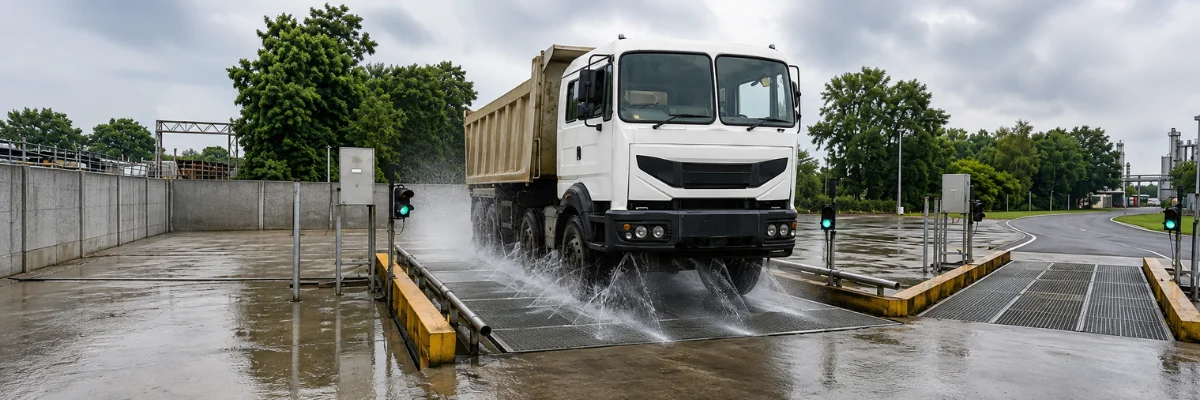
Although the layout may differ between installations, most systems follow a similar sequence from vehicle entry to final exit.
The Wheel Washing Process Step by Step
Step 1: The Vehicle Approaches the Wash Area
The driver follows the designated traffic route toward the wash platform. Signs, barriers, or lane markings may guide the vehicle into the correct position.
The vehicle must approach at a controlled speed so the wheels remain within the intended wash path.
Step 2: The Wash Cycle Is Activated
The system may start through a manual control, pressure trigger, induction loop, or vehicle-detection sensor.
Once activated, the control unit starts the pumps and opens the valves connected to the spray network.
Step 3: Water Reaches the Wheel Zones
Water travels through pipes and spray bars positioned along the platform.
The nozzles direct the flow toward areas where material commonly collects, including:
- Tyre tread
- Inner and outer wheel surfaces
- Wheel arches
- Axle areas
- Lower chassis sections
As the vehicle moves forward, different sections of each wheel pass through the spray pattern.
Step 4: Mud Is Loosened and Carried Away
The combination of water flow, spray angle, and tyre movement helps release material from the wheel surfaces.
The removed soil mixes with the wash water and falls through platform openings or flows toward drainage channels.
Step 5: Used Water Enters the Collection Area
The water and suspended material move into a sump, pit, or collection tank.
Heavier particles begin to settle, while the remaining water moves toward the treatment or recirculation section of the system.
Step 6: Sediment Is Separated
Settlement chambers slow the water flow so mud, sand, and heavier particles can drop to the bottom.
Some installations may also use screens, filters, or additional separation stages to remove smaller debris before the water returns to the spray circuit.
Step 7: Water Returns to the Wash System
Where recirculation is included, the treated water is transferred back to the storage tank.
The pump then draws from this tank during the next wash cycle. Fresh water may be added when required to maintain the correct operating level.
Step 8: The Vehicle Leaves the Platform
Once the vehicle reaches the end of the wash zone, the system stops automatically or is switched off manually.
The vehicle then continues along the exit route after completing the full wash sequence.
What Happens Beneath the Wash Platform?
The visible spray process is only one part of the system. Beneath or beside the platform, channels direct used water into the collection area.
This below-platform arrangement prevents water from remaining on the driving surface and keeps the wash flow moving toward the sediment-control section.
The exact design may include:
- Drainage channels
- Grated openings
- Collection sumps
- Settlement compartments
- Return-water tanks
Each part supports the movement of water through the complete cycle.
How Continuous-Flow and Stop-and-Wash Systems Differ
Continuous-Flow Operation
In a continuous-flow system, the vehicle moves slowly through the platform while the sprays remain active.
The wash duration depends largely on platform length and vehicle speed.
Stop-and-Wash Operation
In a stop-and-wash system, the vehicle pauses within a defined cleaning position.
The sprays operate for a programmed period before the driver receives a signal to continue.
Both methods follow the same basic sequence, but they manage vehicle movement differently.
Answers before you enquire
Frequently asked questions
Does the vehicle need to stop during washing?
Not always. Some systems clean vehicles while they continue moving, while others use a stationary wash cycle.
Where does the removed mud go?
It flows with the used water into a collection pit or settlement area, where heavier material separates from the water.
What starts the wash cycle?
Activation may come from a manual switch, sensor, pressure trigger, or induction loop.
Can the same water be used again?
Yes. Systems with settlement and recirculation equipment can return treated water to the wash tank.
What controls the spray duration?
Spray duration may be controlled by timers, vehicle movement, sensors, or manual operation.
Does every system include underbody sprays?
No. Underbody coverage depends on the nozzle layout and the design selected for the site.
Keep reading
Related guides
Future Trends in Automatic Wheel Washing System Technology
Automatic wheel washing systems are moving beyond simple timed spray cycles. Future designs are likely to use connected sensors, adaptive controls,…
Read the guideSensor Technology for Efficient Wheel Washing Systems
Sensor-based wheel washing systems use automatic vehicle detection to control when the cleaning cycle starts and stops. Instead of operating…
Read the guideFeatures of a Modern Wheel Washing System
A modern wheel washing system should be strong, safe, easy to use, and suitable for heavy vehicles. Its main purpose is to provide reliable cleaning…
Read the guideSend the requirement. Start the right conversation.
Share a part number, a photo, a drawing or a complete BOM. Price, availability, technical scope and delivery are confirmed in your quotation.